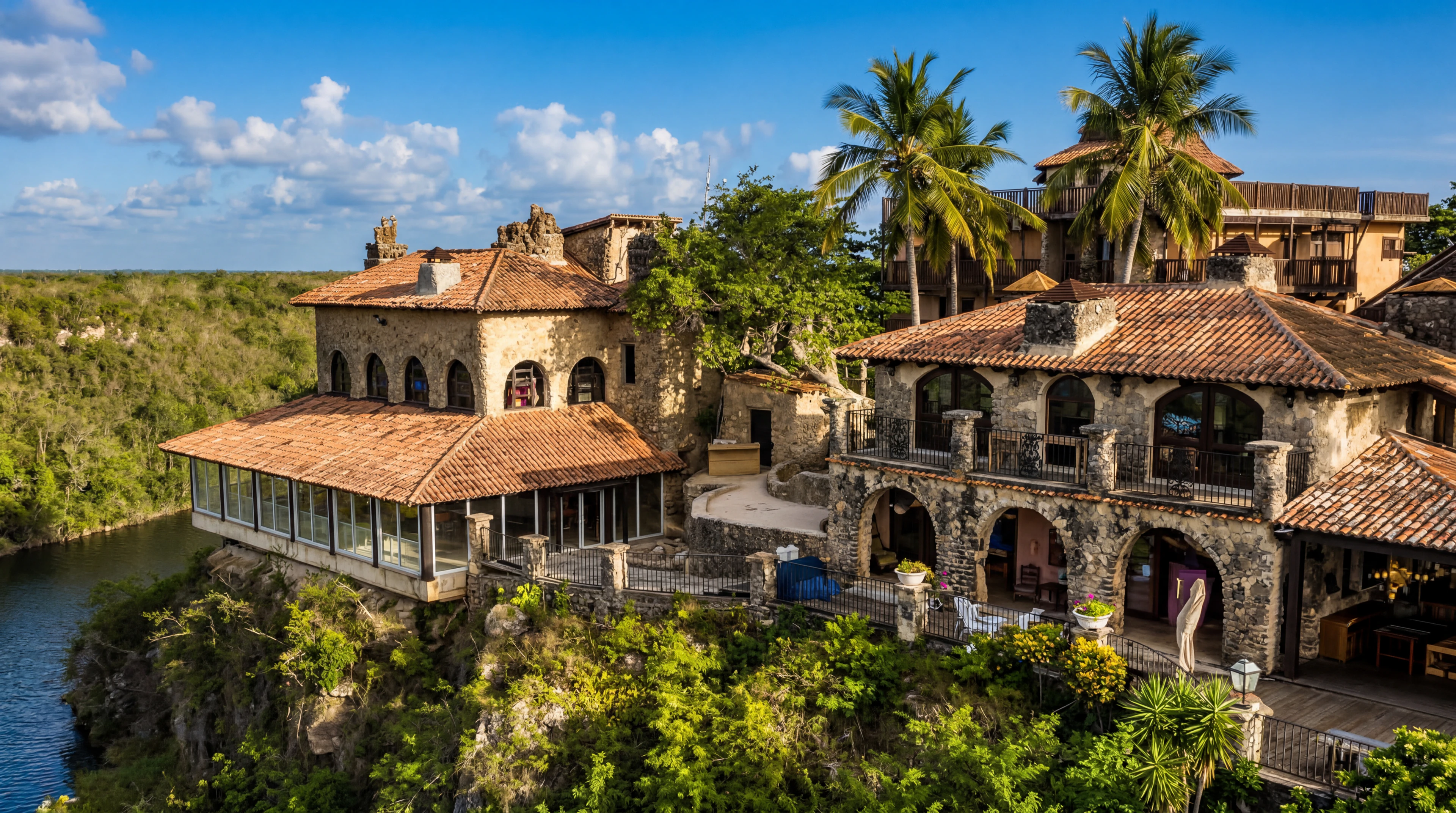
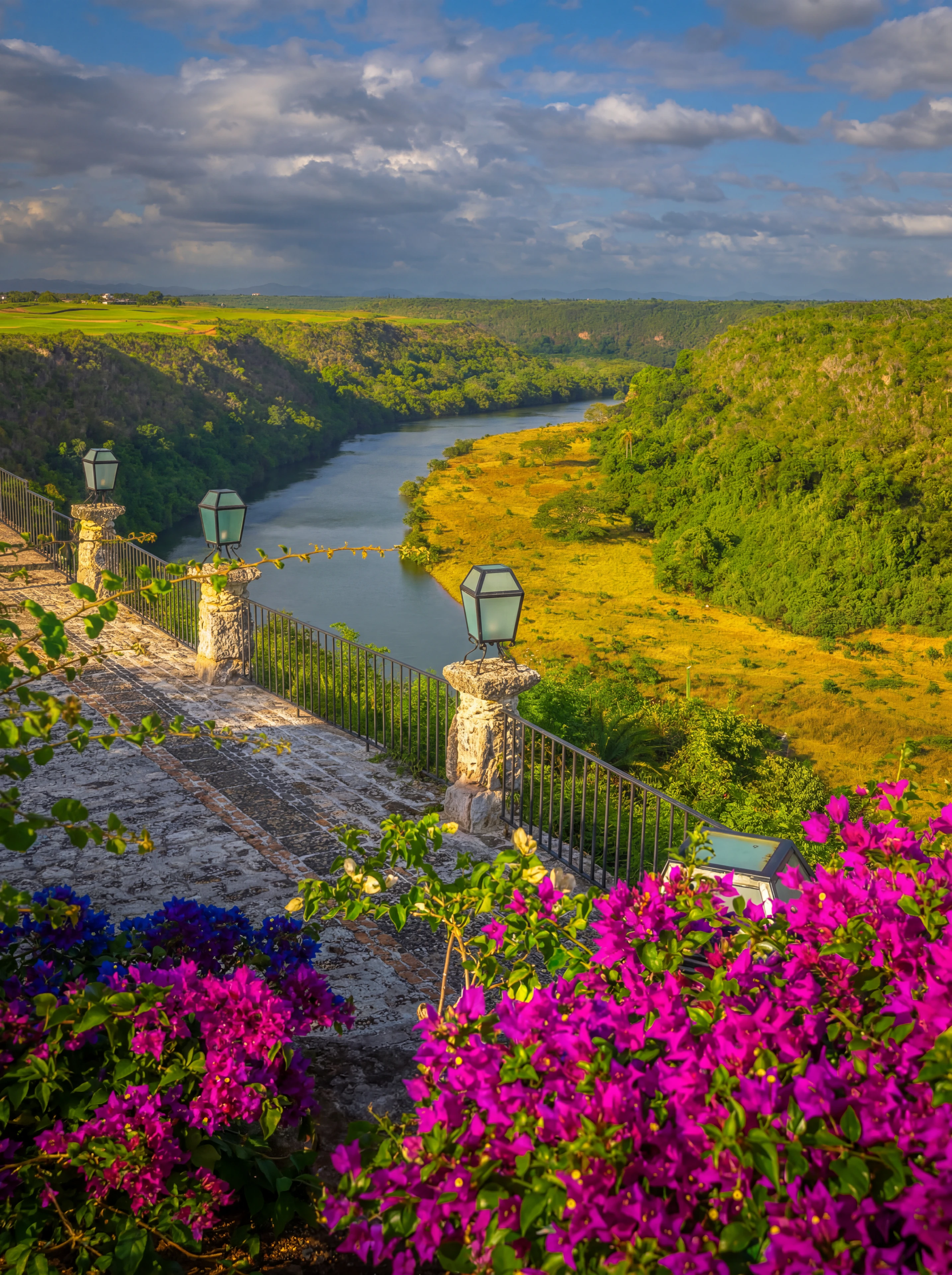
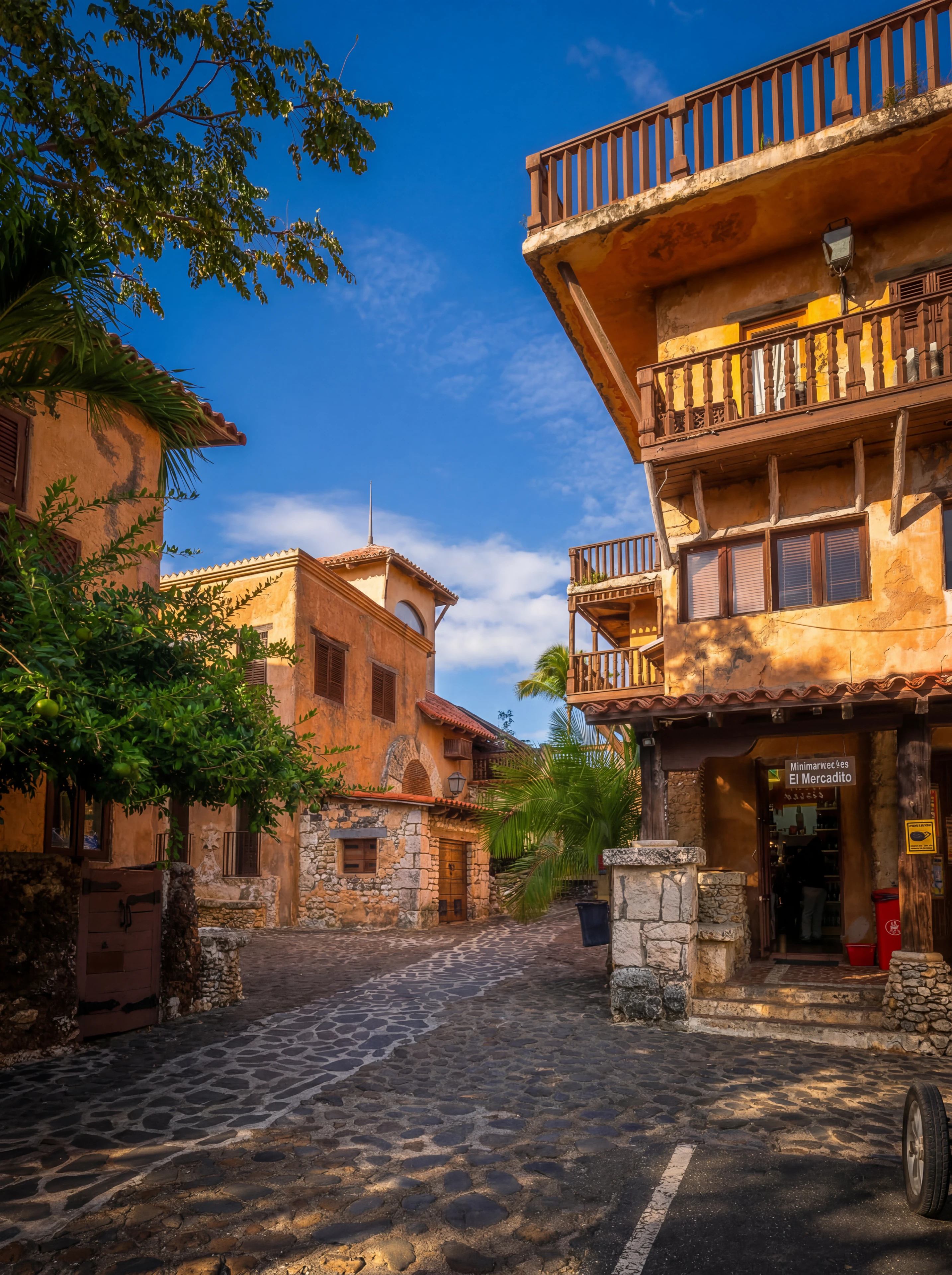
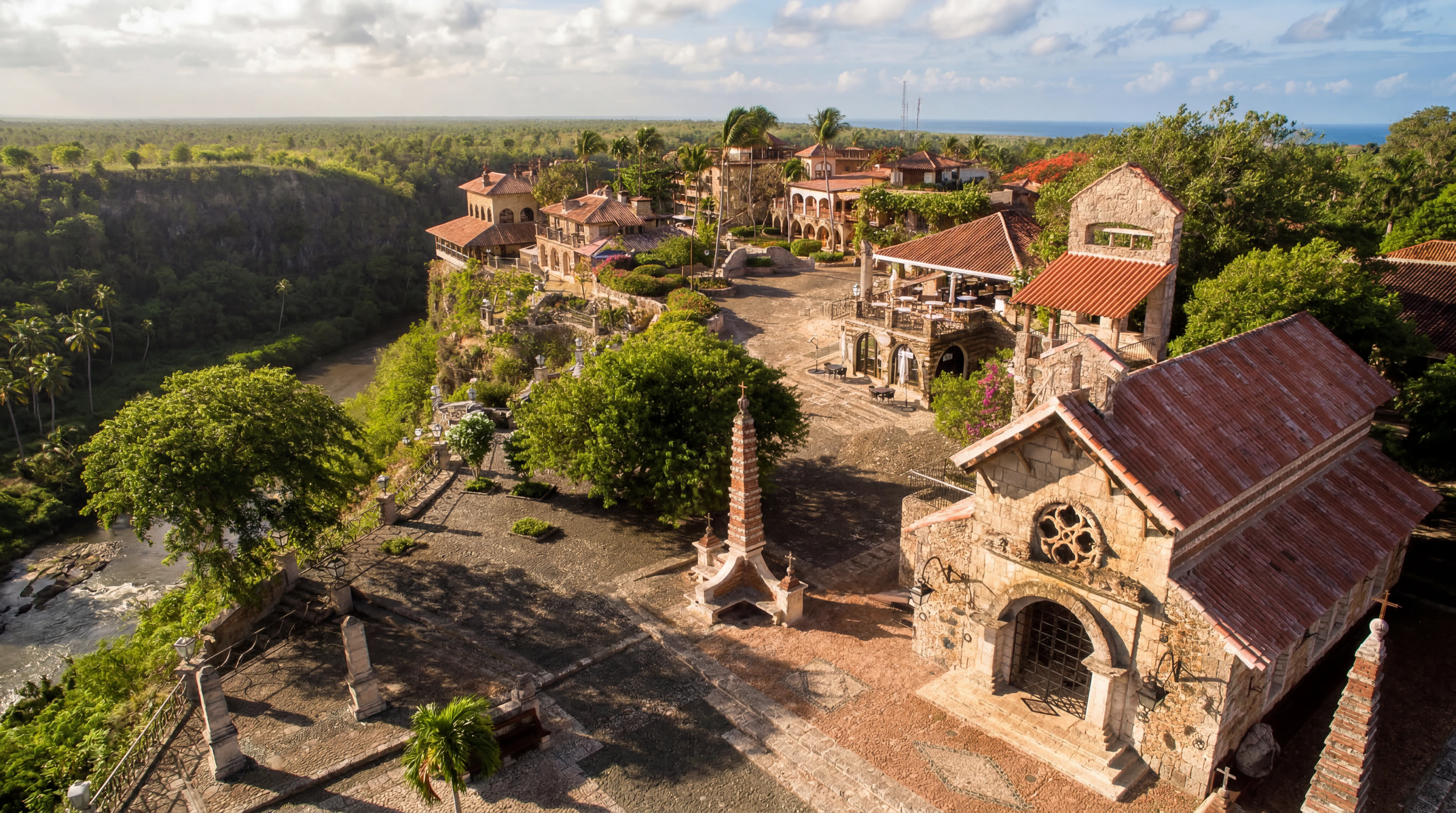
High above the winding Chavón River, a stone village rises from the hillside as if it had been there for centuries. Cobblestone paths wind through coral-stone buildings, iron lanterns glow against weathered walls, and terraces reveal sweeping views across the Dominican landscape.
This is Altos de Chavón, one of the Caribbean’s most remarkable cultural landmarks.
A Village Inspired by the Mediterranean
The village was envisioned in the 1970s as an artists’ community inspired by the romantic hill towns of the Mediterranean, particularly places such as Saint‑Paul‑de‑Vence.
Designed by Italian artist and designer Roberto Coppa, the village was constructed using local stone, much of it excavated during the building of the nearby bridge over the Chavón River. Beginning in 1976, Dominican craftsmen gradually transformed the hillside into what appears today to be a centuries-old European village.
A Stage for the World
At the heart of Altos de Chavón stands its most iconic space: the Altos de Chavón Amphitheater, a dramatic 5,000-seat open-air theater carved into the hillside.
When the amphitheater opened in 1982, Frank Sinatra inaugurated the stage with the legendary Concert for the Americas. Since then, artists from around the world have performed here, making it one of the Caribbean’s most unique concert venues.
A Living Cultural Village
Altos de Chavón was always intended to be more than architecture. It was created as a center for art and creativity.
In 1983, the Altos de Chavón School of Design opened in partnership with Parsons School of Design, attracting students from across the Dominican Republic and beyond.
Today, artists still work in studios throughout the village, concerts fill the amphitheater under the Caribbean sky, and visitors wander the same stone streets that were imagined nearly half a century ago.
What began as a vision on a rocky hillside has become one of the most distinctive cultural destinations in the Caribbean.