

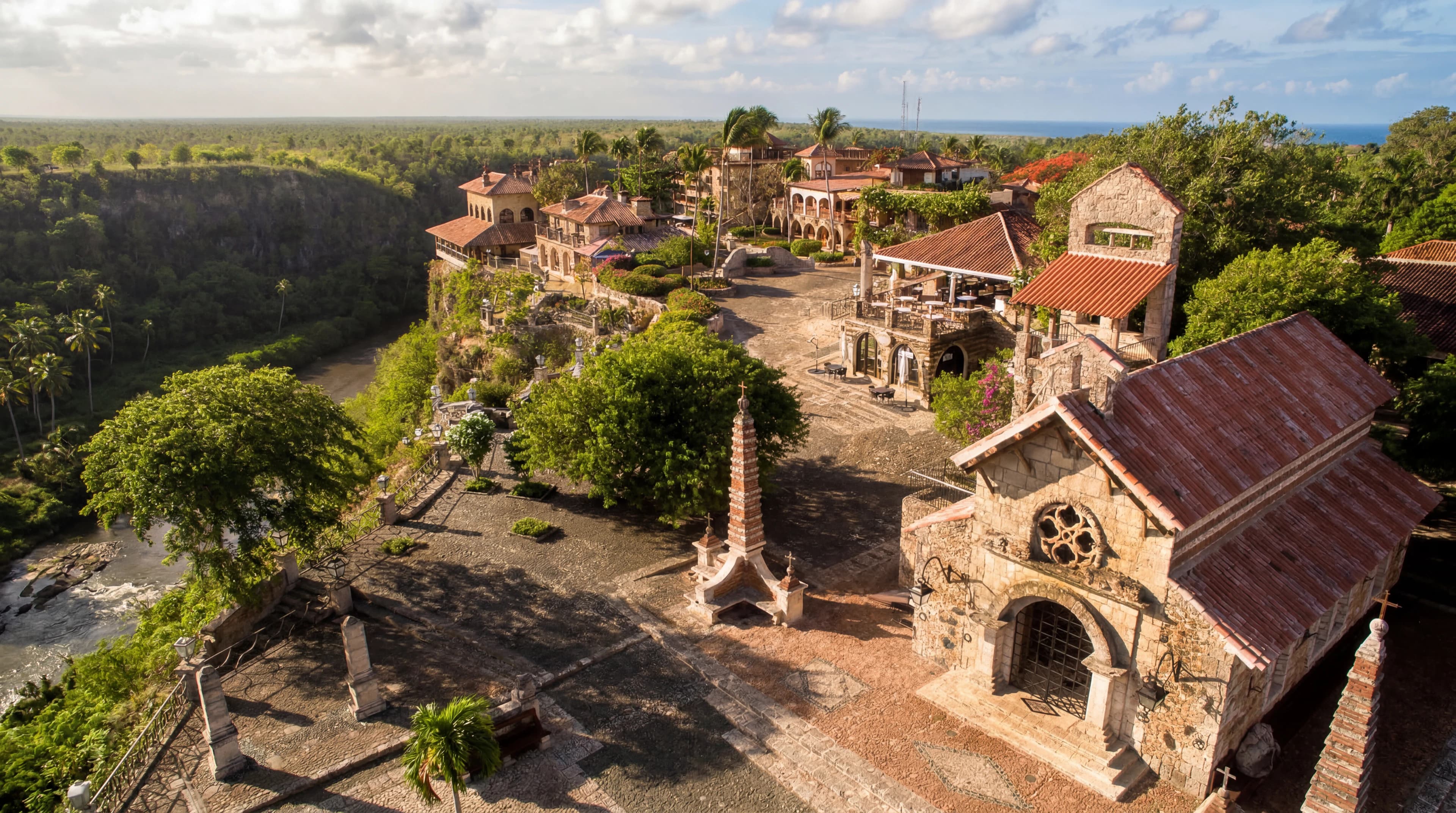

Altos de Chavón is one of those places that feels less like a stop on an itinerary and more like a carefully composed scene. Set above the Chavón River within Casa de Campo, the village was built in the 1970s as a Mediterranean-style enclave, and its stone lanes, shaded terraces, and river views still carry that original sense of intention. For visitors, it offers something rarer than spectacle: a place where architecture, art, and landscape are allowed to speak to one another.
For readers considering the wider Casa de Campo experience, the village also helps explain why the resort has such enduring appeal. It adds cultural depth to a setting better known for beaches, golf, and marina life, and it rewards slow exploration rather than hurried passing through. If you are comparing the broader resort context, the Casa de Campo market guide offers the ownership backdrop, while the Casa de Campo rentals page is useful for seasonal stays that let you experience the area at an unforced pace.
The village’s origin story is part of its appeal
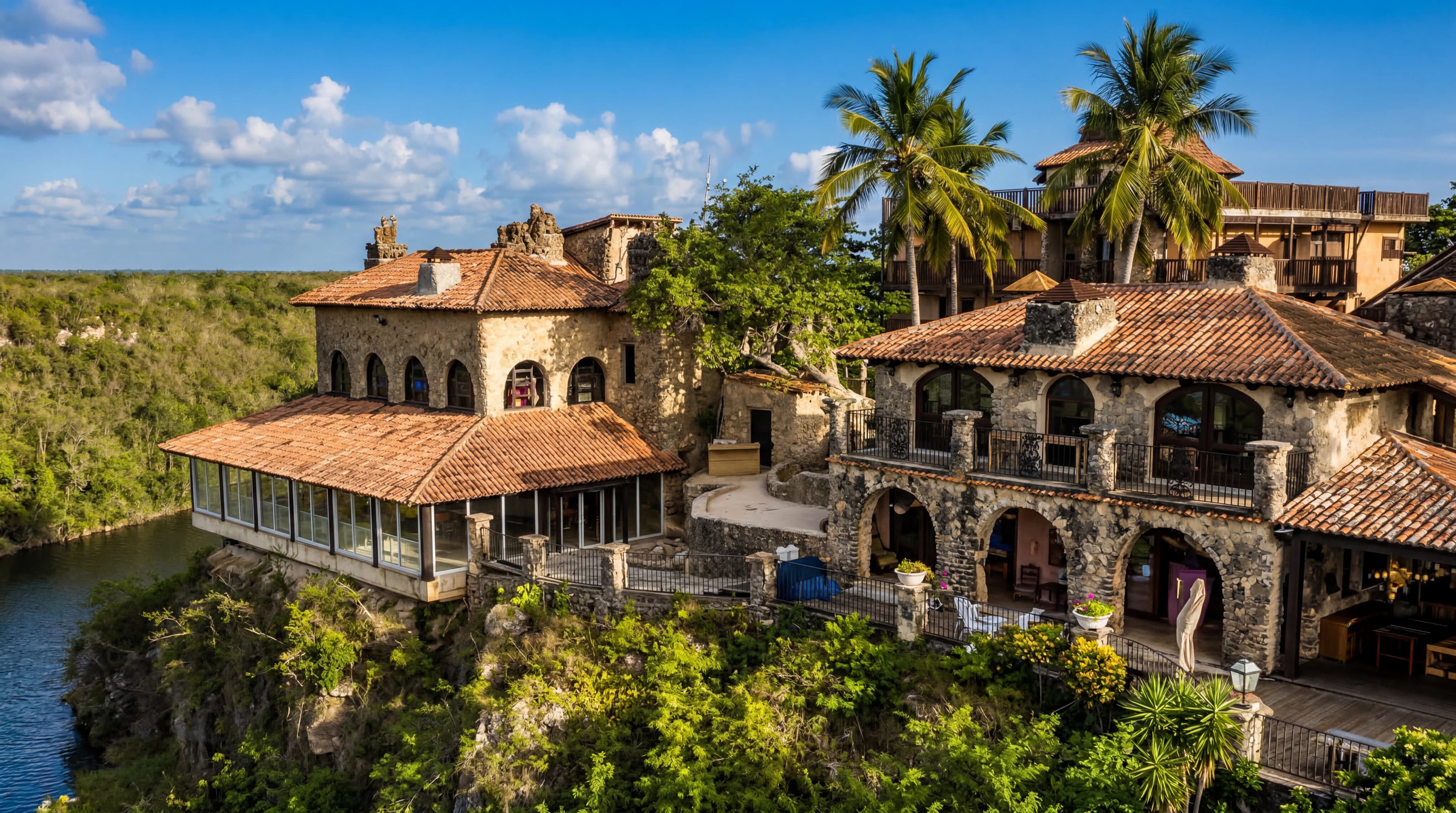
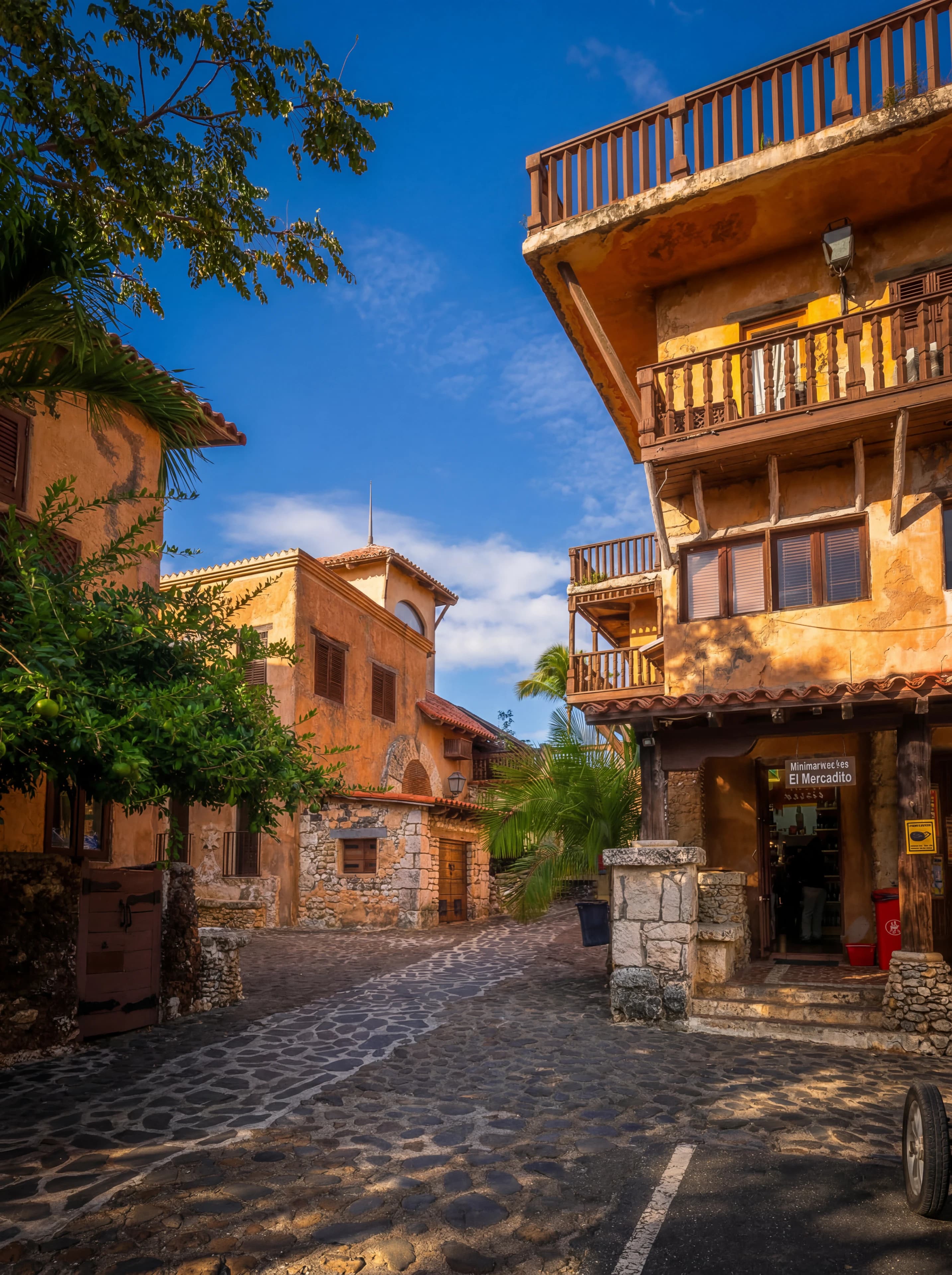
Altos de Chavón was conceived as a Mediterranean-style village rather than a preserved historic district, which is precisely what gives it its unusual atmosphere. The architecture is deliberately evocative: stone facades, narrow passages, arches, and small plazas that feel rooted in old-world craft, yet are unmistakably tropical in their setting. That tension between formality and ease is what makes the village memorable.
Its position above the river matters as much as the design. The elevated site opens views over the Chavón landscape, and the village’s compact scale encourages wandering. For travelers who value places with a sense of authorship, this is not simply a backdrop for photographs; it is a built environment with a clear point of view. In practical terms, that means the best visit is rarely the fastest one. Arrive with time to linger, look outward, and notice how the stonework, courtyards, and terraces frame the surrounding terrain.
The main attractions are close together, but each offers a different lens
Altos de Chavón works well because its key sights are concentrated within a walkable footprint. The Regional Archaeological Museum adds historical texture through pre-Columbian artifacts and a broader sense of the island’s indigenous heritage. The Church of St. Stanislaus, with its intimate scale and simple dignity, is one of the village’s most photographed landmarks and a reminder that the place was conceived to feel lived-in, not merely staged.
The art gallery brings a contemporary layer to the experience, often with exhibitions that shift the mood from heritage to living culture. Nearby, the CHAVÓN School of Design reinforces the village’s role as a creative center rather than a static monument. That combination matters for visitors who prefer destinations with an intellectual or artistic dimension; it gives the village a rhythm that is more layered than a typical resort attraction.
For those planning a broader Dominican Republic itinerary, the village also sits naturally within the country’s southeastern resort corridor. If you are comparing settings, the Dominican Republic properties guide is a useful starting point for understanding how resort, coastal, and urban lifestyles differ across the market.
The amphitheater gives Altos de Chavón its public life
Few parts of the village are as iconic as the amphitheater, a 5,000-seat venue that has given Altos de Chavón a cultural reach far beyond Casa de Campo. It remains one of the Dominican Republic’s most recognizable performance spaces, and recent programming has continued to keep it relevant, with major concerts and seasonal events drawing both residents and visitors. The scale is large enough to feel significant, but the setting keeps it intimate in a way that open-air venues often cannot.
That balance is important for travelers deciding when to visit. An event night changes the energy of the village entirely, making it feel lively and communal. A quieter daytime visit, by contrast, reveals the architecture and the views more clearly. If your time is limited, it is worth checking the calendar before you go so you can decide whether you want the village in performance mode or in its more contemplative state. Either version has merit; they simply offer different readings of the same place.
How to visit well: timing, pacing, and what to notice
The most rewarding visits tend to happen either early in the day or later in the afternoon, when the light softens the stone and the village feels less compressed. Midday can be bright and active, which suits visitors who want energy and movement, but the architectural details are easier to appreciate when shadows define the edges of the buildings and stairs.
Guided visits can be worthwhile if you want context on the village’s creation, its cultural institutions, and the relationship between Altos de Chavón and the wider Casa de Campo estate. Independent visitors, meanwhile, may prefer to move slowly, pausing at overlooks and small courtyards. The village is not large, so the decision is less about navigation than about tempo. Spend enough time to notice how the place is composed: the stone, the elevation, the river views, and the way public life gathers around the amphitheater and the central walkways.
If your interest extends beyond a single visit, the village is also one of the clearest expressions of Casa de Campo’s long-view identity. For buyers and seasonal residents, that perspective can be helpful. It is one thing to know the resort by reputation; it is another to understand the cultural fabric that gives it depth. For private assistance, BARNES can also help with a discreet search through off-market access for those comparing homes within the resort and its surrounding lifestyle ecosystem.
Altos de Chavón endures because it offers more than a picturesque stop. It is a place where architecture, performance, and landscape are assembled into a coherent experience, and that coherence is what sophisticated travelers tend to remember long after the visit ends.